Breastfeeding After a C-Section: Common Challenges and the Solutions That Actually Work
Having a cesarean birth (c-section) is a common way that many mothers deliver their babies — and while breastfeeding after a C-Section does come with some unique challenges, the good news is that it does not affect your natural breastfeeding abilities.
In fact, breastfeeding after a C-section can be an important part of healing physically, emotionally, and hormonally. For many mothers, it becomes the moment they reclaim confidence after a birth that may not have gone the way they expected.
Whether you just had a cesarean section and are looking for answers, or are preparing for the possibility, here’s what actually changes, what stays the same, and some of the common challenges with solutions that truly help.

Why Breastfeeding Can Feel Different After a C-Section
Breastfeeding isn’t harder after a c-section because your body is less capable, it’s harder because your recovery is different. That’s it.
Here’s what that may look like:
1. Incision discomfort
You may feel pulling, burning, or soreness when you sit upright, lean forward, or hold baby across your abdomen.
2. Limited mobility
Rotating your torso, lifting baby, and sitting up from bed all require abdominal strength, which is exactly where your surgical incision is.
3. Sleepier baby in the first 24–48 hours
This is normal after surgical anesthesia. Sleepy babies latch differently and may need more help staying awake.
4. Some parents experience a slight delay in milk coming in
This isn’t universal, but when it happens, it’s often due to delayed skin-to-skin, IV fluid overload, or interruptions in early feeding.
5. Hospital routines may interrupt early feeding cues
Post-op monitoring, vital checks, and recovery room transitions sometimes delay the first feed.
None of these things say anything about your body’s ability to breastfeed.
They are logistical challenges, not biological limitations.
What Stays Exactly the Same After a C-Section
This is the part most mothers often aren’t told, and it matters:
- Colostrum is ready immediately after birth, regardless of delivery type.
- Your hormones still follow the same milk-production pathway.
- Feeding on cue supports supply the same way.
- Latch mechanics are the same for vaginal birth and C-section.
A C-section changes your recovery not your capability.
The Most Common Breastfeeding Challenges After a C-Section and the Positions That Actually Help
Breastfeeding after a C-Section isn’t about doing it perfectly. The most important thing is to find positions that protect your incision, reduce pain, and support a deep latch while your body heals. Here’s what most parents run into after surgery, and the feeding positions that make each challenge easier.

Challenge #1: Incision Pain or Pressure on Your Abdomen
Why it happens:
Upright or forward-leaning positions can pull on the incision and make early feeds uncomfortable.
Positions that help:
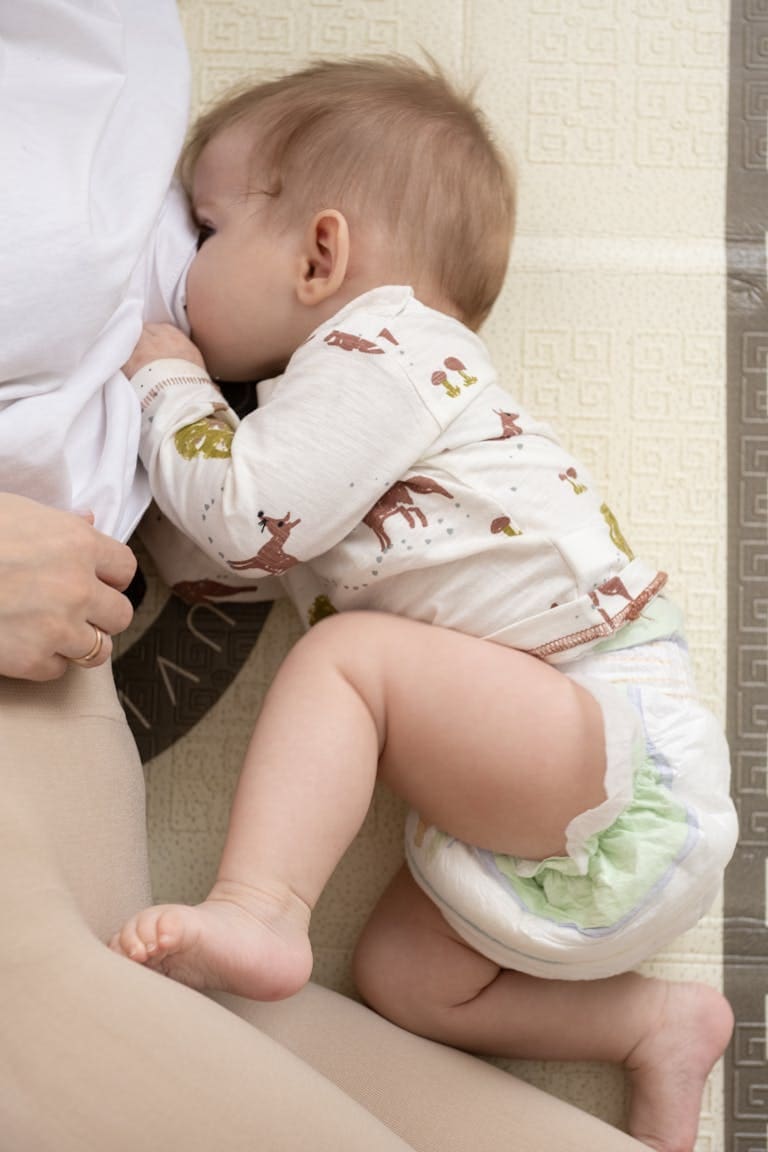
- Side-Lying: zero pressure on your abdomen, ideal for the first few days
- Football Hold: keeps baby off your incision completely
- Laid-Back / Semi-Reclined: reduces core engagement and lets gravity help with latch
These positions let you relax your abdominal muscles so feeding doesn’t feel like a tug-of-war with your recovery.
Challenge #2: Limited Mobility After Surgery
Why it happens:
Rotating, lifting baby, or sitting straight up from lying down can be difficult during the first week.
Positions that help:
- Side-Lying: no lifting required once you’re settled
- Laid-Back: easy to transition into from bed
- Football Hold: offers control without twisting your torso
Pro tip: Have a partner hand you the baby until you feel more stable.
Challenge #3: Baby Is Sleepy or Hard to Keep Awake for Feeds
Why it happens:
Anesthesia and pain meds can make newborns extra drowsy in the first 24–48 hours.
Positions that help:
- Laid-Back: uses gravity to keep baby in position even if they’re sleepy
- Football Hold: helps maintain head control for babies who struggle to stay latched
- Upright / Koala (as recovery improves): great for alertness and deeper latch
Pair with breast compressions to keep baby actively sucking.
Challenge #4: Sitting Upright Feels Impossible
Why it happens:
Your core is recovering, and sitting at a 90° angle can over-engage those muscles.
Positions that help:
- Side-Lying: most comfortable early on
- Laid-Back: reduces tension and allows rest
- Football Hold: avoids leaning forward
If upright positions feel painful, it’s a sign your body needs gentler angles.
Challenge: Worry About Milk Coming In Slowly
Why it happens:
Some parents experience a minor delay in milk production due to the cesarean section itself, IV fluids, recovery routines, or delayed skin-to-skin.
Frequent feeding + skin-to-skin are the most effective ways to support supply. Ensuring your baby has a secure latch is also extremely important to ensure proper transfer of milk.
Positions that help:
- Laid-Back: encourages instinctual feeding cues and deep latch
- Side-Lying: supports frequent, restful feeds
- Football Hold: excellent for active milk removal once baby is more alert
If you are unsure about this, you can get help from a lactation consultant. Our team of IBCLC’s are available to help ensure that your baby is feeding properly. Reach out here to schedule a free consultation.
When It’s Time to Get Additional Support
Seek an IBCLC evaluation if you notice:
- Persistent nipple pain
- Latch slipping, clicking, or shallow latch
- Baby not waking to feed
- Fussiness at the breast
- Concerns about supply
- Pain or discomfort that never improves
- Difficulty positioning even after the first week
Common Questions: Breastfeeding After a C-section
Not biologically. The challenges are logistical, such as positioning, not hormonal.
As soon as you’re awake and stable. Earlier is ideal, but not mandatory.
Side-lying, football hold, or laid-back.
Not inherently. Support, latch, and frequency matter more.
No, they do not typically affect breastfeeding. Although some can cause temporary drowsiness in the infant.
Use positions that keep baby’s weight off your abdomen.
Increase skin-to-skin, feed frequently, and get latch support from an IBCLC.
Anytime pain persists or feeding feels harder than it should.
A C-section doesn’t redefine your body or your ability to breastfeed. Recovery and feeding can coexist and the right support makes all the difference.
If feeding after a C-section feels harder than expected or if you are looking for some extra support, our team of IBCLC’s can help.
Book your virtual consult today!
We are proud to offer 100% covered care with Aetna, Cigna, Anthem PPO, BCBS PPO, and UHC plans.